



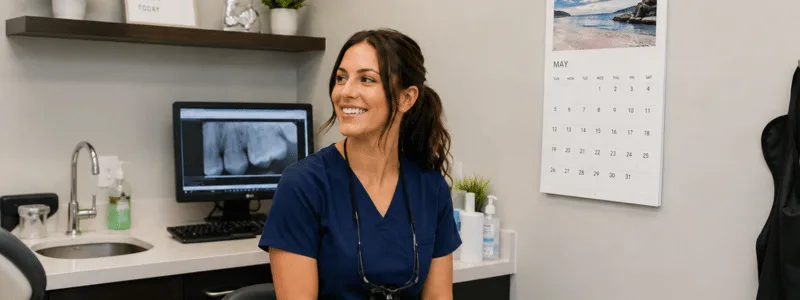
Dental hygienists are in high demand as the dental hygiene shortage continues. The Bureau of Labor Statistics projects roughly 15,300 new hygienist job openings per year through 2034, and most markets have more open positions than qualified candidates to fill them. The real question is not whether a job exists, it’s which type of job actually fits your schedule, income goals, and the kind of practice you want to work in.
Dental hygienist jobs are widely available across private practices, DSOs, community health clinics, and on-demand staffing platforms. In most markets, you can find both full-time and part-time job opportunities. The fastest way to find current openings is through dental-specific platforms like GoTu, which connect RDHs directly with verified offices looking for temporary and permanent help.
The Dental Hygienist Job Market
Employment of dental hygienists is projected to grow 7% from 2024 to 2034, this is faster than the average across all occupations. That growth also outpaces most healthcare support roles and reflects something real happening on the ground: practices are struggling to keep their schedules covered.
Many people have said that two main forces are driving this. The first is a retiring hygienist workforce, a large wave of experienced RDHs are leaving the operatory, and dental practices are actively looking to fill those chairs with new talent. The second is a cultural shift in how patients think about oral health. The research connecting gum disease, heart disease, and diabetes has gone mainstream. Patients are coming in more consistently, preventive visits have increased, and practices that once ran two hygienists are now budgeting for three.
The result is a job market that genuinely favors dental hygienists. There are roughly 221,600 hygienists employed nationwide, and practices in nearly every state are hiring. Whether you are a new graduate or a seasoned RDH looking for something different, this is a good time to know what your options look like.
Types of Dental Hygienist Jobs
Not all dental hygienist jobs are the same, and the differences matter more than most job postings make clear. Understanding the main types of positions before you start applying saves you from landing somewhere that does not fit how you want to work.
Full-Time Hygienist Jobs Pay More but Lock In Your Schedule
A full-time hygienist position is typically four to five days a week at a single practice, with a salary or guaranteed hourly rate, and some practices offer benefits like health insurance and PTO. The pay ceiling is higher than part-time, and their is more consistency with the types of patients, team, and schedule each week.
The trade-off is flexibility, full-time positions usually require a set schedule negotiated at hire, and changing it later can be difficult. If the culture or the dentist is not a good fit, you are committed until you decide to leave. For hygienists who want stability and a home base, full-time works well. For those who want more control over their time, the tradeoffs can add up quickly.
Part-Time Hygienist Jobs Give You Room to Breathe
Many dental offices do not need a hygienist five days a week. A practice running two or three hygiene days may hire a part-time RDH rather than a full-time one, which opens up a common arrangement: two to three days per week at one practice, with schedule flexibility built in.
Part-time positions are worth taking seriously as a long-term option, not just a temporary measure. A hygienist working three days at a quality practice, with the other two days open for temp shifts or personal commitments, often ends up with more income and more schedule control than their full-time counterparts. The key is finding a part-time role at a practice that actually respects that boundary.
Temp and Per-Diem Hygienist Jobs Offer Maximum Schedule Control
Temp hygienist jobs, also called per-diem or PRN positions, work on a shift-by-shift basis. You pick up a shift at an office that needs coverage, complete the day, get paid, and decide what comes next. There’s no long-term commitment, plus no awkward resignation conversations.
This used to be seen as a stopgap between permanent jobs, but that has changed over the years. A significant number of RDHs now work temp shifts as their primary or supplementary income source, and platforms like GoTu have made the logistics straightforward. You create a profile, set your availability, and accept shifts at verified offices in your area. Offices are rated and reviewed after each shift, so you are not going in blind.
The biggest upsides of temping are the control and premium pay rates. Temp rates often run higher than standard hourly rates at permanent positions, particularly for short-notice shifts. Hygienists stacking multiple days per week across different offices frequently earn more than they did working full-time at one practice, with none of the schedule constraints.
Government and Community Health Jobs Offer Stability at a Different Scale
Hygienist positions within VA clinics, federally qualified health centers (FQHCs), and school-based programs operate differently from private practice. The pay typically runs below what private practice offers, but the schedules are predictable, the mission is clear, and the patient population is often underserved in ways that make the work feel meaningful.
These roles are worth considering for hygienists who want to exit the fee-for-service model, have strong interest in public health, or are managing factors like federal loan forgiveness programs that incentivize work in underserved settings.
What to Look for When Evaluating a Dental Hygienist Job Offer
The hourly rate is typically the number everyone looks at first, but it’s not the most important number. Here is what actually shapes whether a hygienist job works for you day-to-day.
- Patient time matters most. An office with one hour per patient runs differently from one with 30 minutes per patient. Ask specifically about appointment length before you accept. Compressed scheduling is one of the fastest routes to burnout, and no hourly rate compensates for a day where you are perpetually behind.
- Support staff is closely related. A hygienist working with a dedicated hygiene assistant can see more patients at a higher quality of care and finish the day less exhausted. Offices that expect hygienists to turn over their own rooms are not wrong to do so, but you should know that going in and factor it into your rate expectations.
- Practice software is worth asking about. Dentrix and Eaglesoft are the most common platforms, and most hygienists are fluent in both. If an office runs something more obscure, ask whether training is provided, learning new software on the fly during a full patient day is a real friction point.
- Culture is harder to screen for in an interview but possible. Ask to walk through the office before accepting. Watch how the front desk interacts with the back, and ask the interviewing dentist what they do when a hygienist flags a periodontal concern they disagree with. The answers can tell you more than the job description.
Finding Dental Hygienist Jobs
Generic job boards like Indeed and ZipRecruiter do list dental hygienist jobs, and they are worth checking. The problem is noise: postings often go stale without being taken down, job titles are inconsistent, and you end up sorting through listings from practices with no idea of their reputation.
Dental-specific platforms filter most of that out. GoTu works differently, we connect RDHs with verified offices for both temp and permanent placements, with profiles, ratings, and reviews on both sides. Offices on GoTu have been screened. Temporary shifts show exactly what you will be earning, so there is no wondering what the offer is going to be.
If you are open to temp or per-diem work, even as a supplement to a permanent position, GoTu is worth setting up regardless of your current employment status. Many hygienists find their next permanent home through a temp shift at an office they liked. It’s a low-commitment way to evaluate a practice before committing to it.
You can find dental hygienist shifts near you and set your availability in under 10 minutes. The 200,000+ dental professionals already on the platform are a signal that this is not a stepping stone, it’s where hygienists are actually finding work.