


 Written by
H&R Block Advisors
Written by
H&R Block Advisors
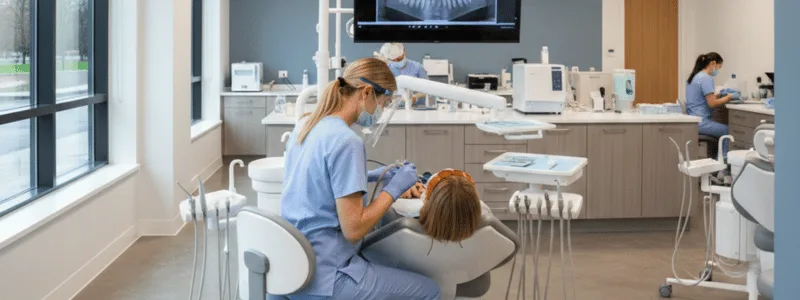
Dental professionals such as dentists, hygienists, and assistants may qualify as 1099 independent contractors if they maintain control over when, where, and how they work, and meet federal and state classification criteria. However, classification laws vary significantly by state, and some states—such as California and Massachusetts—require stricter tests that often result in employee status. Dental practices should carefully evaluate each role using IRS and state guidelines to ensure compliance.
Why Dental Professionals Can Be 1099 Contractors
Independent contractor status may apply when the professional, not the employer, controls key aspects of the work. For dental professionals, that often means:
- The freedom to accept or decline shifts
- Flexibility to decide when, where, and how to work
- The ability to choose opportunities that align with their preferred pay rates
These factors match the IRS’s definition of a contractor, which is why many dental professionals correctly receive a 1099 at tax time.
Where 1099 Applies vs. Where It Doesn’t
- Most states: 1099 classification is allowed and common in dentistry. However, laws vary significantly by state, and some states—such as California and Massachusetts—require stricter tests that could result in employee status.
- Certain states: Worker classification laws require dental professionals to be classified as W-2 employees. In those states, clinicians receive W-2s rather than 1099s.
The distinction is based on state employment law, not on the dental industry itself.
Why 1099 Is Not “Illegal”
There is often confusion around independent contractor classification because of industries that misclassify employees. However, the 1099 status itself is not illegal. It depends on a number of factors, including the level of independence in the working relationship.
Dental professionals who control their schedules, their workplaces, and the terms they accept may properly be classified as 1099 contractors unless state law requires otherwise.
The Benefits of Being 1099
Independent dental professionals can access advantages that traditional employees cannot, including:
- Tax deductions: Scrubs, continuing education, mileage, licensing fees, and professional memberships may be deductible.
- Multiple income streams: Ability to work with different offices and expand earning potential.
- Career flexibility: Building a schedule and income path tailored to personal goals.
Expanding Your Options with an LLC
While an LLC is not required to claim deductions or work as a 1099 contractor, many professionals choose to form one. An LLC can:
- Separate personal and business finances
- Provide liability protection
- Offer more flexibility in how income is taxed
Through GoTu’s partnership with Block Advisors by H&R Block, professionals can get support to set up an LLC and explore the benefits of treating their career like a business. This option helps independent contractors maximize the advantages of their 1099 status.
In conclusion, 1099 is not illegal for dental professionals. In fact, it may be the appropriate and compliant classification in some states where professionals work meet certain factors, like working on their own terms. Understanding how 1099 status works and how to take advantage of available deductions or LLC structures, empowers professionals to keep more of what they earn and protect their financial future.
Frequently Asked Questions
Q: Is it legal for dental hygienists to be 1099 contractors?
A: Yes. In many states, dental hygienists and other dental professionals can legally be 1099 contractors if they meet certain factors, such as controlling their schedules, choosing where and how they work, and deciding which opportunities to accept. Some states require W-2 employment instead.
Q: What is the difference between a 1099 and a W-2 in dentistry?
A: The distinction between a 1099 and a W-2 in dentistry hinges on the nature of the working relationship and the level of control exerted by the dental practice. For example, W-2 classification applies to employees who work under the direction and supervision of the practice, with set hours, provided equipment, and integrated responsibilities. 1099 classification applies to independent contractors who operate with autonomy, choosing when, where, and how they work. However, classification is not a matter of preference—it must comply with IRS and state guidelines. Misclassification can lead to penalties, back taxes, and legal exposure. Factors such as behavioral control, financial arrangement, and the overall relationship between the worker and the practice determine proper classification.
Q: Do dental professionals need an LLC to work as 1099 contractors?
A: No. Dental professionals can file as 1099 contractors without an LLC. An LLC is optional but can help separate business and personal finances, provide liability protection, and create tax flexibility.
Q: What deductions can dental professionals take as 1099 contractors?
A: Common deductions include scrubs, protective gear, licensing fees, continuing education, professional association dues, malpractice insurance, mileage, equipment, and software used for work.
Q: If I earn less than $600, will I still get a 1099?
A: No. You will not receive a 1099 if you earn under $600 from a payer in a year, but you are still expected to report that income on your tax return.
Q: How do I report 1099 income on my tax return?
A: Most independent dental professionals report 1099 income on Schedule C when filing their taxes, where they can also claim deductions.
Q: Can being 1099 lower my tax liability?
A: Yes. Claiming eligible deductions reduces taxable income, which lowers overall tax liability for 1099 dental professionals.
This article is for informational purposes only. The content may not constitute the most up-to-date information and should not be construed as legal advice.