

Dental placement technology uses 3D imaging, computer-aided design software, and custom surgical guides to plan and execute implant procedures with sub-millimeter accuracy. These digital tools let dentists map out the exact position, angle, and depth of an implant before making a single incision.
The shift from freehand placement to guided placement changes what’s possible in implant dentistry. This article covers how each technology works, the benefits for accuracy and safety, and what the digital planning process looks like from your first scan through final placement.
What Is Dental Placement Technology
Dental placement technology refers to the digital tools dentists use to plan and place implants with far greater accuracy than traditional methods allow. The core components include 3D imaging systems like CBCT scanners, computer-aided design software, and custom surgical guides that direct exactly where an implant goes. Together, these tools let your dentist map out the entire procedure virtually before touching your mouth.
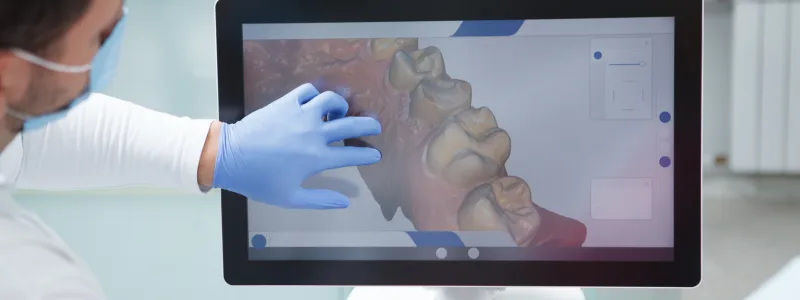
Here’s what that means in practice. Instead of relying on flat X-rays and experience alone, your dentist can rotate a 3D model of your jaw on a screen, measure bone thickness at the exact implant site, and identify where nerves run. The implant position, angle, and depth are all determined before surgery begins. Then a physical guide is printed that fits over your teeth and directs the drill along that predetermined path.
The shift from freehand placement to guided placement changes the nature of the procedure. There’s less guesswork, more predictability, and typically a smoother experience for you.
How 3D Imaging Improves Implant Accuracy
Three-dimensional imaging gives dentists a complete picture of your anatomy that two-dimensional X-rays simply can’t provide. With a 3D scan, your dentist can see bone density, nerve locations, sinus cavities, and the roots of adjacent teeth all at once.
Cone Beam Computed Tomography for Precise Mapping
Cone Beam Computed Tomography, or CBCT, is the imaging technology behind most digital implant planning. The scanner rotates around your head and captures hundreds of images in about 20 to 40 seconds. Software then assembles those images into a detailed 3D model.
What makes CBCT particularly useful is the level of detail it provides:
- Bone density measurement: Your dentist can assess whether you have enough bone to support an implant at a specific location.
- Nerve identification: The scan shows exactly where the inferior alveolar nerve runs through your lower jaw, allowing your dentist to plan a safe distance from it.
- Anatomical variations: Some people have unusual sinus positions or bone shapes that affect implant placement. CBCT reveals these before surgery rather than during it.
The radiation exposure from CBCT is approximately 28% lower than medical CT, making it a practical diagnostic tool for routine implant planning.
Digital Impressions for Custom Fit
Intraoral scanners have replaced the messy impression trays many patients dread. A handheld wand captures thousands of images per second as it moves across your teeth and gums, creating a precise digital model of your mouth.
This digital model integrates directly with implant planning software, making familiarity with dental technologies increasingly valuable for the full clinical team. Your dentist can design the final crown or bridge first, then work backward to determine where the implant needs to sit for optimal function and appearance. The process connects the restorative outcome to the surgical plan from the start.
Surgical Guides for Exact Positioning
Once the virtual plan is complete, it’s used to create a surgical guide. This is a custom device, usually 3D-printed from biocompatible plastic, that fits snugly over your teeth or gums. The guide contains metal sleeves positioned exactly where the implant drill will enter.
Think of the guide as a stencil. It physically constrains the drill to follow the planned path, translating the virtual plan into real-world precision. Without a guide, even an experienced surgeon relies on visual estimation and tactile feedback. With a guide, the margin for deviation shrinks considerably.
Benefits of Computer-Guided Dental Implant Surgery
Digital planning and guided placement offer several practical advantages over traditional freehand techniques. The benefits show up in accuracy, efficiency, invasiveness, and long-term results.
Greater Precision in Implant Positioning
Guided surgery achieves placement accuracy within fractions of a millimeter. When an implant sits at the correct angle and depth, the final restoration fits better and distributes chewing forces more evenly. Even small deviations in angle can affect how a crown looks and functions, so precision at the surgical stage matters for the final outcome.
Reduced Procedure Time
When the surgical path is predetermined, there’s less decision-making happening during the procedure itself. Your dentist follows the guide rather than making real-time judgments about position and angle. For you, that typically means up to 24 fewer minutes in the chair with your mouth open.
Minimally Invasive Techniques
Precise pre-planning often enables what’s called a flapless procedure. Instead of cutting and lifting a section of gum tissue to expose the bone, your dentist can place the implant through a small circular punch in the gum. Less tissue disruption generally means less swelling, less discomfort, and faster healing.
Improved Long-Term Outcomes
Implants placed at the correct angle and depth integrate better with surrounding bone, a process called osseointegration. Better integration translates to stronger, more stable implants over time. While traditional placement can certainly succeed, guided placement reduces early failure rates by nearly two-thirds and minimizes the variables that might compromise long-term results.
How Digital Technology Enhances Patient Safety
Beyond precision and efficiency, digital placement technology addresses several safety concerns that have historically accompanied implant surgery.
Reduced Risk of Nerve Damage
Damage to the inferior alveolar nerve during lower jaw implant surgery can cause numbness or tingling in the lip and chin, sometimes permanently. With CBCT imaging, your dentist can see exactly where this nerve runs and plan an implant path that maintains a safe distance from it. The risk doesn’t disappear entirely, but it drops significantly when the nerve location is known in advance.
Lower Infection Rates
Minimally invasive procedures mean smaller wounds and less exposed tissue. When there’s less surgical trauma, there’s less opportunity for bacteria to enter and fewer complications during healing. Flapless guided surgery tends to produce lower infection rates than traditional open-flap techniques.
Predictable Healing and Recovery
Because guided surgery is planned in advance and executed with precision, recovery tends to follow a more predictable timeline. You’ll have a clearer idea of what to expect, and your dentist can give you more accurate guidance about when you can return to normal activities.
3D Guided Surgery vs Traditional Implant Techniques
If you’re comparing options or trying to understand what a practice offers, here’s how the two approaches differ:
| Factor | Traditional Technique | 3D Guided Surgery |
|---|---|---|
| Planning method | 2D X-rays, visual assessment | 3D CBCT scans, virtual planning |
| Placement accuracy | Relies on dentist experience | Computer-guided precision |
| Procedure invasiveness | Often requires larger incisions | Often enables flapless approach |
| Pre-surgical visualization | Limited | Complete 3D view of anatomy |
Traditional techniques can still produce excellent results, particularly in straightforward cases with experienced surgeons. However, guided surgery adds a layer of predictability that benefits both simple and complex cases. For situations involving multiple implants, limited bone, or proximity to nerves, the advantages of guided placement become more pronounced.
Types of Advanced Dental Technology for Implants
Several technologies work together to enable digital implant placement. Each plays a specific role in the workflow.
CBCT Scanners
CBCT machines rotate around your head, capturing images that software assembles into a 3D model. Most scans complete in under a minute and provide detail that traditional X-rays cannot match. The 3D model becomes the foundation for all subsequent planning.
Intraoral Scanners
Handheld wands capture digital impressions of your teeth and soft tissues, eliminating the need for traditional impression materials. The resulting files integrate directly with planning software and can be used to design both the surgical approach and the final restoration.
CAD/CAM Design Software
Computer-aided design and manufacturing software allows dentists to virtually position implants, design restorations, and simulate the final outcome. This is where the planning happens, where your dentist can test different implant positions and see how each affects the final result.
3D-Printed Surgical Guides
Custom guides are fabricated from biocompatible materials based on the digital plan. They’re typically printed in-house or by a dental lab and arrive ready for use during surgery. The guide translates the virtual plan into physical guidance for the drill.
Why Precision Placement Technology Supports Better Patient Care
Digital placement technology represents a shift toward more predictable, patient-centered care. When procedures are planned virtually and executed with guidance, there’s less room for error and more consistency in outcomes.
For dental practices, adopting advanced technology also means having team members who understand how to use it effectively. Practices investing in digital workflows often look for dental professionals with experience in CBCT interpretation, digital planning software, and guided surgery assistance.
Looking for shifts at tech-forward practices? GoTu connects dental professionals with offices that use the latest tools and techniques. If you’re a practice seeking experienced staff who can support digital implant workflows, GoTu’s marketplace helps you find qualified professionals quickly